Seasonal Affective Disorder
How do you start to feel when you notice the nights are drawing in, do you notice a change or dip in your mood? Some people do so more than others, most of us will feel a little sad that summertime is over and depending on where you live this may mean shorter days, less sunlight, longer darker evenings and cold or wet weather setting in. Others may embrace this time of year and enjoy keeping warm inside, a time for slowing down a little or changing focus to indoor projects. Meanwhile for some people it can bring with it a real sense of foreboding.
There is a growing knowledge about Seasonal Affective Disorder (SAD) more often referred to as SAD! For some of us we may relate well to this term because that’s how we start to feel as the sun gets lower, the days get shorter, and the dark evenings come upon us. But what does this all mean? Well, for some people the autumn and winter months bring with it a feeling very similar to depression the main difference being SAD symptoms mainly occur in the winter months. SAD is associated with becoming less interested and a lack of enjoyment, loss of energy, increase in irritability and low mood. This leads to spending more time in bed, sleeping longer, overeating when awake, craving ‘comfort foods’ as your body strives for energy, difficulty getting up in the morning and feeling sleepy during the day. As you crave more energy foods, carbohydrates, chocolate, bread, or sugar loaded food you may even put on weight which can lead to a vicious cycle:
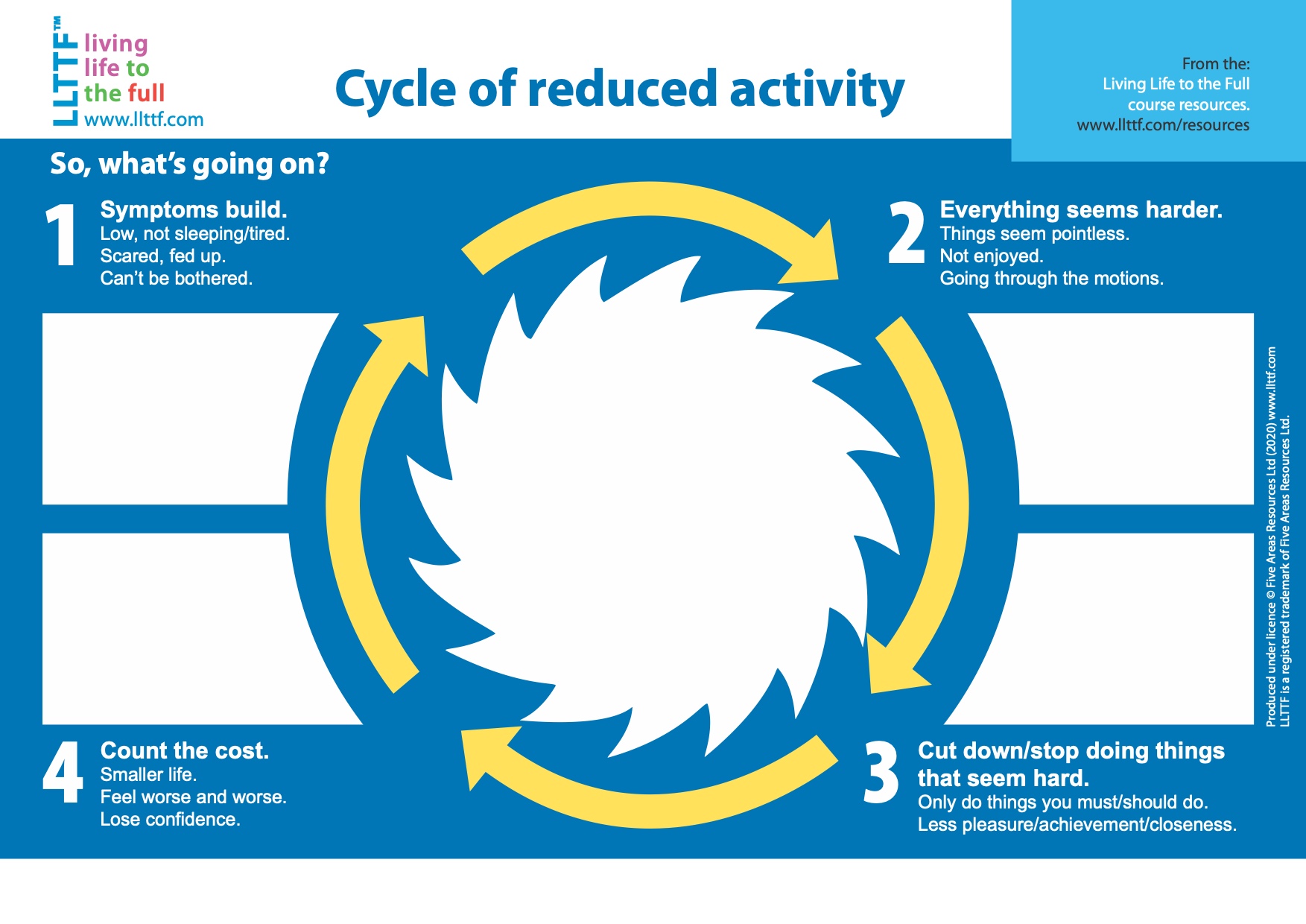 Thought – ‘I’m so tired’ Behaviour – ‘Eat more food’ Physical Feelings – rather than more energy ‘feel bloated and lethargic’ Emotional feelings – ‘low, guilty, ashamed’ and the cycle begins to spin Thoughts – ‘Why do I always feel like this in winter’?, ‘I should know better’, ‘I’m just greedy’, I’m a failure’ ….. the vicious cycle goes round and round. Download the worksheet here.
What can you do about it and where to start?
By becoming familiar with the symptoms of SAD. As we leave the summer months behind and enter the autumn winter months if you notice a drop in energy levels or your mood, find it difficult concentrating and it lasts for more than two weeks, or you’ve noticed a recurring theme over the years then your first port of call is to speak to your local GP. SAD can be somewhat difficult to diagnose because there are similar symptoms for other mood conditions. If your symptoms are having an impact on your life, it may well be SAD. You will most probably be advised to keep a mood diary to see if there is a pattern of symptoms for example a similar time each year, and improvement in mood at similar times in the year. Usually starting around autumn time and improving as springtime approaches. If symptoms occur 2 years in succession, you may meet the diagnostic criteria for SAD.
Other symptoms you may experience are sleeping more often and for longer periods, difficulty getting up in the morning, lack of energy, poor concentration, being less active, increased appetite especially for high energy foods and weight gain over the winter months, all this making day to day living activities more difficult.
Who gets SAD?
Sad is found to be more common in women particularly during their childbearing years, three times more common than men.
Many of us may feel more tired, gain weight, and stay home more during the winter months, this means we could benefit from making some small adjustments to our day to stay healthy.
Treatment options
The National Institute for Health and Care Excellence (NICE) is our go to guide on best evidence-based treatment recommendations. Advice is developed by independent committees made up of various professional and lay people. NICE recommends that SAD should be treated in the same way as other forms of depression. This includes mainly Cognitive Behavioural Therapy and, in some cases, if required anti-depressants.
We can take the same approach that we do for low mood. This most often means taking a self-help cognitive behaviour therapy (CBT) approach. Some people may benefit from anti-depressants alone or combined with talking therapy. However, there is growing evidence to suggest a ‘light box’ is helpful for some people. The idea behind the light box is that it provides artificial sunlight in the morning just like the dawn – encouraging you to get up and stimulating your circadian clock. Daily exposure for timed periods of bright artificial light is often labelled the ‘gold standard approach for SAD. More information on light boxes can be found on the internet or contact Seasonal Affective Disorder Association – SAD.uk
Cognitive Behavioural Therapy Approach – What can you do yourself?
Cognitive behavioural therapy (CBT) is based on the principle that the way we think affects how we feel and in turn impacts on what we do. Therefore, thinking differently and changing what you do can help you feel better. This does not always mean seeing a highly trained therapist. There are many ways of accessing a CBT approach. Face to face, online or book resources.
Visit our new free online course www.llttf.com/sad
Organise your time and routine
Most of us will notice a little dip in our mood as it becomes darker in the early evening. Therefore, it’s even more important to be mindful of taking regular exercise, eating well, having a routine for during the day and bedtime – encouraging a good sleep pattern. Insert weekly activity planner/link to sleep module here

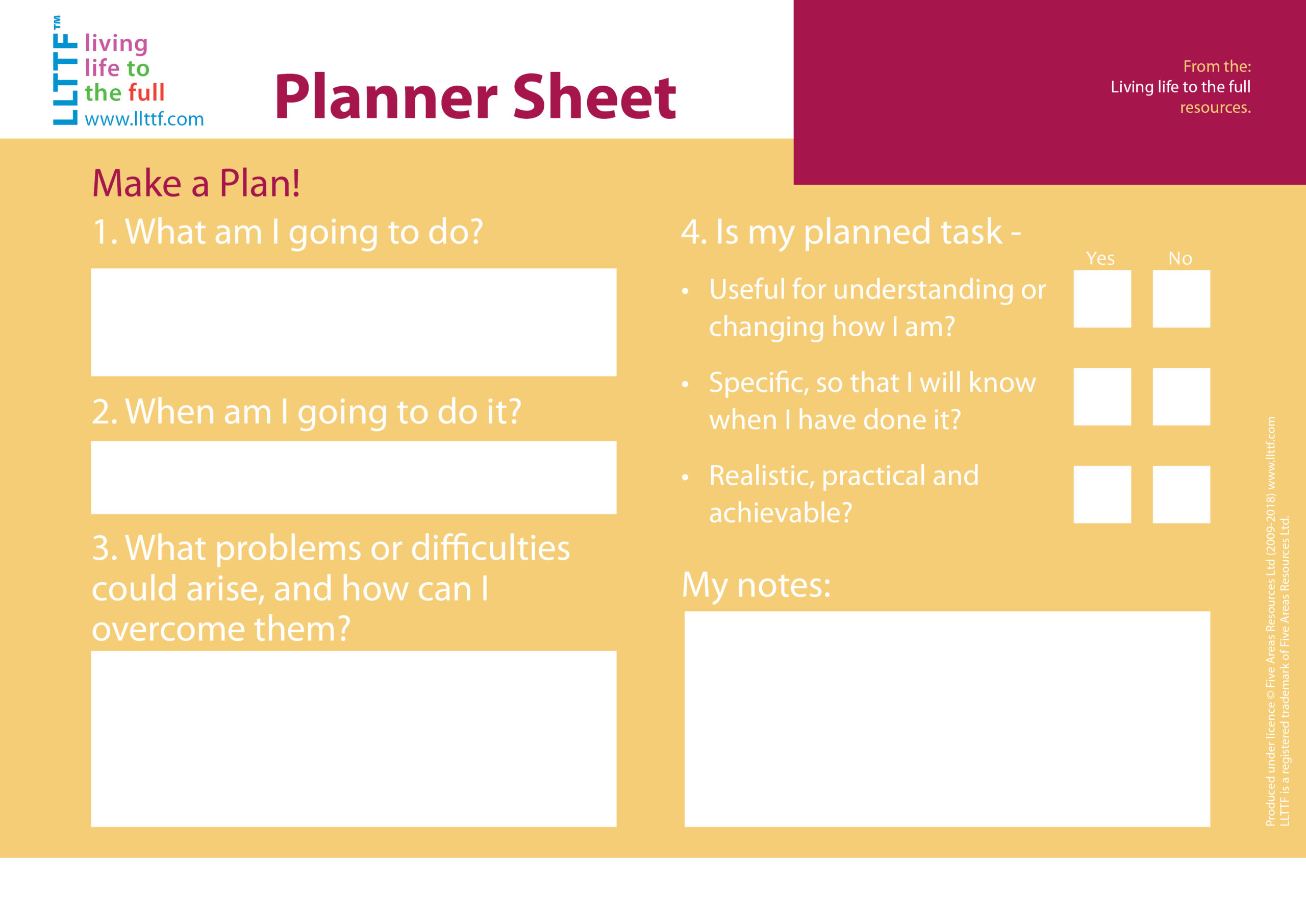
Even though the days are shorter keeping in touch with family and friends maintaining that sense of closeness to others is also important to our health and wellbeing. If you are finding this difficult then you may find our worksheets – ‘My Happy List’ and ‘My Activity Planner’ a helpful place to start.
My Happy List is all about actively reminding yourself of the things you’ve stopped doing, things that give you a sense of pleasure, achievement, closeness to others and help you to have a routine – providing you with the anchors to your day. A time for eating, a time for you and spending time with others and a time for sleep. You can then start by gradually slotting them into your Activity Planner. A word of caution though – don’t try to do it all at once otherwise you may create another Vicious Cycle of over activity – exhaustion – low mood. So, take things small steps at a time and create a Virtuous Cycle instead. Pace yourself and make the adjustments you need to at this time of year. Balance the should stuff with the good stuff and you’ll improve how you feel.
Environment
Ensure your home and workplace are as light and have fresh air as much as possible, position yourself nearby windows when you’re indoors.
Managing stress
Talk to family, friends, and employees, tell them how you are feeling and the things they can do to support you to keep well. This way they will more likely understand the changes in your mood during the winter and spring. For example, share with them your ‘how to help me’ list – being there for me, being willing to talk, staying supportive but realistic. Share your what might not be helpful list – e.g. wrapping me in cotton wool, repeatedly telling me what to do, forgetting that we are all different.
Resist the temptation to cancel plans it’s easy to talk yourself out of things that will make you feel better – even if only for a short time.
Keeping moving
Getting outdoors during the winter months is important for many reasons, even when its blustery or a little wet, wrap yourself up warm and go for that walk. Walking can not only boost your physical health, but your mental health gets a boost too. Professor Chris Williams at LLTTF describes a ‘Wow Walk’ as something you can do to feel happier straight away, go outside and really notice what’s out there, the wind, the warmth, the cold, the rain, the trees/flowers, and the sky.
When you take a mindful ‘Wow Walk’ you notice how truly wonderful the world really is full of things that make us go Wow! So, when you’re feeling low put on your Wow glasses and see the world for the amazing place it is. Don’t forget to wrap up warm and even better go with a friend and you’ll soon tick all those boxes. Remember to build up slowly and do something like this regularly for it to have any real impact on how you feel over the coming weeks and months. If you really can’t get outdoors, then start by doing some gentle exercise that’s manageable from your front room (If you have an underlying health condition always speak to your health advisor or GP before starting a new exercise programme).
Vitamin D
During the summer months our body performs an important function. It builds up a store of Vitamin D (we get this important Vitamin from the sun’s rays on our skin). Vitamin D helps our body in the production of calcium for healthy bones and muscles and it has also been found to help our mood. However, in the cloudier days and months of winter when the sky is grey, we may become low in this vital vitamin so getting outdoors more often or speaking to your health adviser about a winter supplement can be helpful. You only need as little as 15 minutes of exposure to natural sunlight a day to maintain your Vitamin D store for the winter months.
Diet
People with SAD have a tendency toward eating more high energy, carbohydrate, high sugary foods than required in an attempt to boost their energy levels. However, this can lead to weight gain and spikes and troughs in energy levels throughout the day. Instead snacking on the right type of carbohydrate food can help improve and alleviate symptoms. Aim to eat more of the right kind of carbohydrate those in the form of low sugar popcorn, whole wheat bread or bananas to help increase the serotonin mood enhancing hormone in your brain you need at this time. Sugary refined carbohydrates have virtually no mood boosting effect and can leave you feeling less energised in the long run. So, ditch those high energy sugar laden drinks and snacks.
Gratitude
 Some people find it beneficial to take some time towards then end of the day to make entries in their diary/journal of what has gone well that day, managing to go out for a walk despite feeling otherwise and on their return noting down how they felt, what went well, who did they enjoy being with. For others perhaps they push themselves too much and this contributes to the feelings of tiredness, low mood and self-criticism. They may find our slow down and be guide to mindfulness helpful. Insert link here to slow down and be resources.
More help
The Royal College of Psychiatry.
If you’re interested in finding out more about SAD for yourself or family or friends then don’t forget to follow the link below to learn more and start changing things for the better. Visit our new free online course www.llttf.com/sad
The Living Life to the Full team.